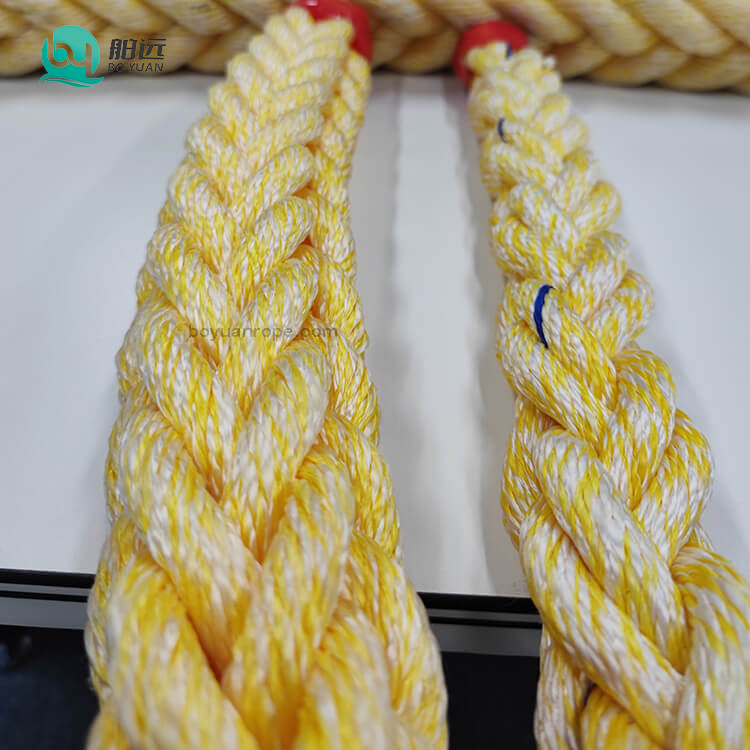
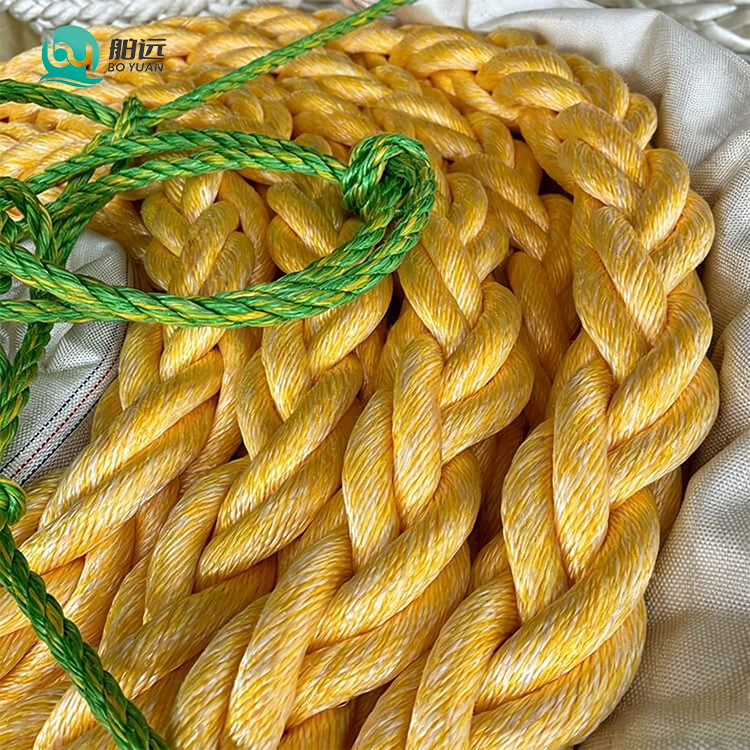
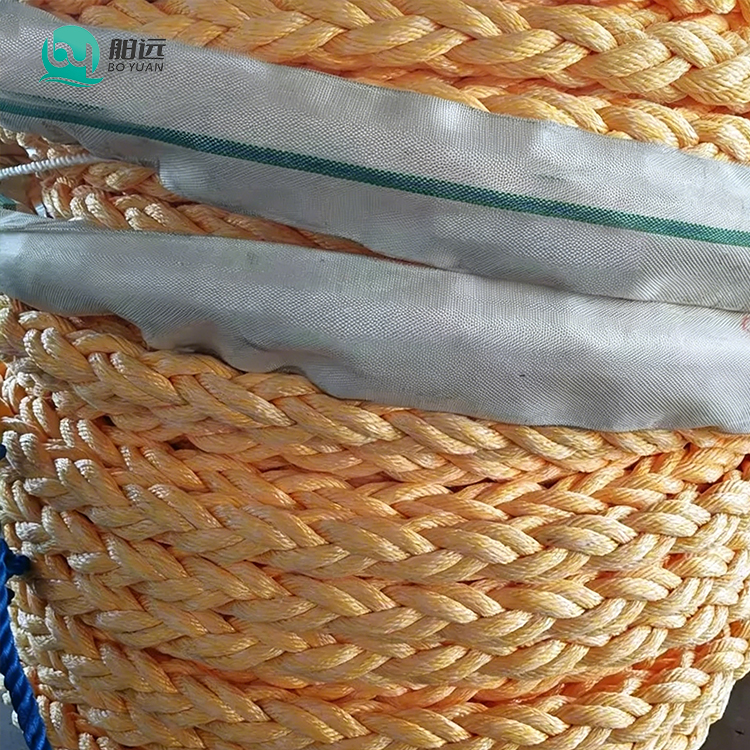
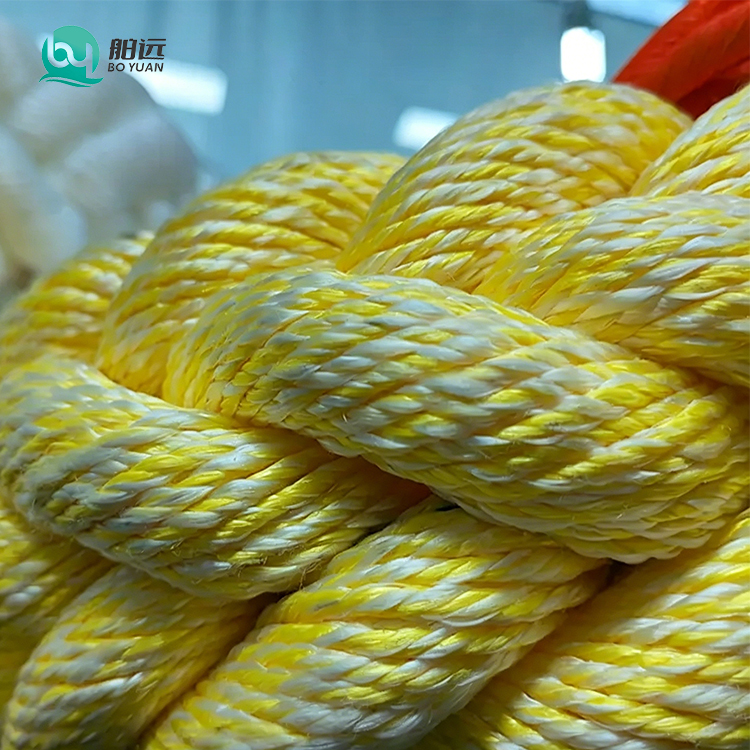
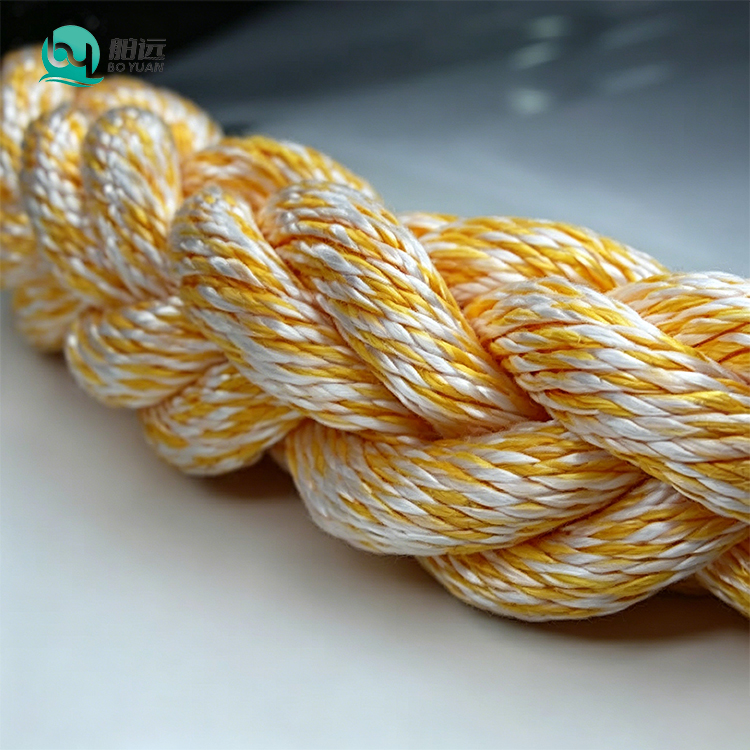

PP polyester mixed rope has irreplaceability in marine ropes. The strategic integration of polypropylene (PP) and polyester (PES) within a 12-strand braided architecture creates a polymer composite engineered for extreme marine service. Beyond conventional blends, this hybrid manifests molecular-level interoperability:
1. Hydrodynamic Load Mitigation
– PP Dominance: Achieves 0.92 specific buoyancy, eliminating 38% sinker chain weight vs. nylon per DNVGL-RP-E305
– PES Reinforcement: Delivers <0.3% elastic recovery lag under 25-75% MBL dynamic loading cycles
2. Structural Fatigue Optimization
Cross-sectional micro-CT scans reveal the triaxial load distribution matrix:
– 12 interlocked strands form 36 stress-dissipation pathways
– Retains 89% residual strength after 5×10⁶ flex cycles (exceeding OCIMF MEG4 Annex F by 17%)
– Demonstrates 9.2 kN/mm² hysteresis energy absorption during snap-load events
3. Chemical Defense Mechanisms
| Threat | PP Defense | PES Defense | Synergistic Action |
| Biodiesel exposure | Swell resistance | Hydrolysis resistance | Diffusion-blocking copolymer interface |
| Acidic drilling mud | Limited degradation | Cationic dye affinity | Ion-exchange barrier |
Critical Application Benchmarks:
– Floating LNG terminals: Withstands -50°C cryogenic spray (ASTM F3062 compliance)
– Dynamic positioning thrusters: Limits torque-induced hockling to <3°/meter
– Salvage operations: Maintains 100% MBL at 30% elongation during controlled deballasting
Material Verification Protocol:
– Enforce ISO 13437 soil burial testing for biodegradation resistance
– Validate PES crystallinity index (62-68% via DSC analysis)
– Require 3D optical profilometry for braid geometry conformity
> Field data from North Sea OSVs shows 22% lower CAPEX over 8-year lifecycle due to zero sacrificial anode requirements (Lloyd’s Register 2025).
If you need pp polyester mixed rope, please contact us.