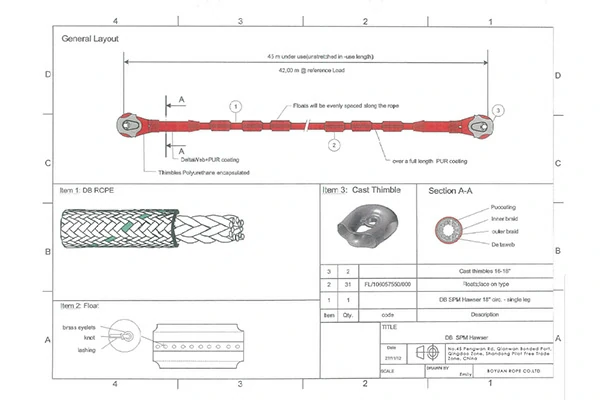
The question about offshore mooring hawsers often puzzles many in the marine industry. Why does a single hawser drawing show two different lengths?
In offshore mooring, it’s common to see a hawser length of 45 m under use and 42 m at reference load. Understanding these terms helps clarify their significance in maritime operations.
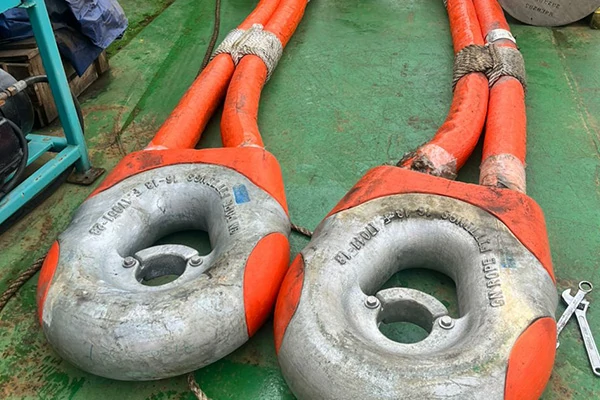
When we talk about hawser lengths in offshore mooring, it can be confusing. The two different lengths represent different measurements—one is total length, and the other is a reference length. This distinction is crucial for safe and efficient operations.
LOOP START
What Do the Two Lengths Represent?
In the realm of offshore mooring, understanding the difference between these two lengths is essential.
The length of 45 m refers to the total length of the hawser assembly, which includes every component. In contrast, the 42 m length is the distance from bearing point to bearing point, which is measured under specific conditions.
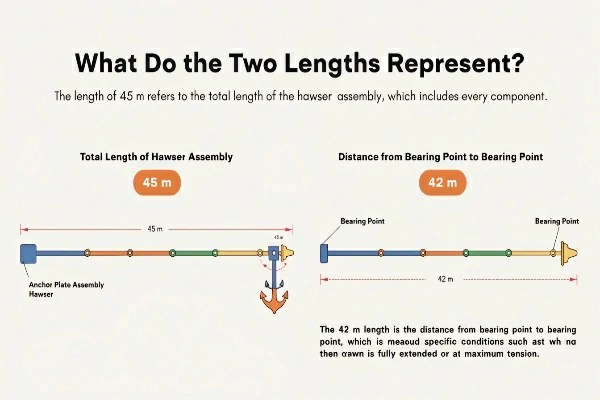
To understand this better, let’s break down what comprises the total length. The 45 m figure includes the entire assembly, which consists of:
- Two End Eyes: These are the loops at each end of the hawser, used for connection.
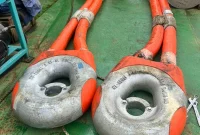
- Cast Thimble: A thimble protects the rope from wear and adds to its durability.
- Rope Body: This is the main part of the hawser, where most of the load is carried.
The 42 m length is measured only between the points where the hawser bears the load. This measurement is taken under reference conditions, ensuring that the hawser behaves predictably when under tension. It’s key to know that this difference in measurement is common and noted in OCIMF drawings.
LOOP END
Conclusion
In conclusion, understanding the two different lengths of an offshore mooring hawser is vital for ensuring safety and efficiency in marine operations.