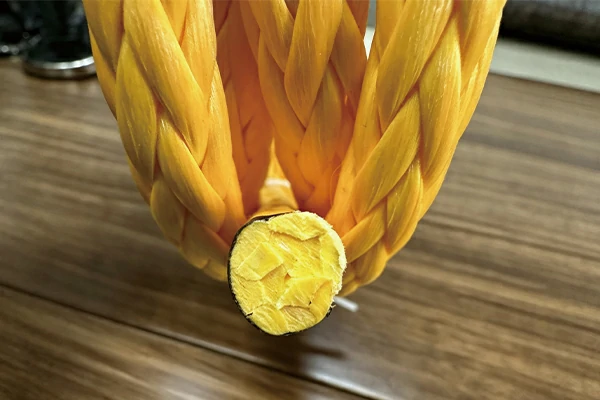
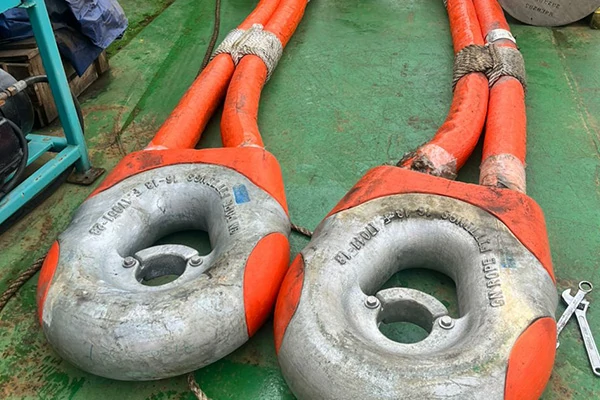
Shackles are essential hardware tools widely used in industries such as maritime, construction, and outdoor activities. These devices serve as connectors between chains, ropes, or other lifting and rigging equipment. Among the various types of synthetic soft shackle, the most common are the D-shaped shackles (commonly referred to as straight shackles) and bow-shaped shackles (also known as anchor shackles). While their basic purpose is similar, their shapes and structural designs make them suitable for different applications and load requirements.
D-shaped shackles are characterized by their straight-sided, narrow design, forming a “D” shape. This structure makes them ideal for linear loads, where the force is applied in a straight line. The compact design allows them to adapt to small spaces. Provide strong and efficient load-bearing capacity while maintaining the same tension or load direction. They are particularly suited for applications like lifting or towing, where precision and minimal lateral movement are necessary. However, due to their narrow opening and lack of flexibility, D-shaped shackles are less suitable for situations where multiple ropes or chains need to be connected or when the direction of the force changes frequently.
Bow-shaped shackles, on the other hand, feature a wider and more rounded body, forming a bow-like shape. This larger opening allows for greater versatility, as they can accommodate multiple ropes, chains, or slings simultaneously. The circular design also provides flexibility in handling loads from different angles. Make bow shaped shackles the preferred choice under dynamic load conditions or when multi-directional forces are involved. These shackles are typically used for applications such as mooring, anchoring, and rigging, where a single shackle typically connects multiple components. However, compared to D-shaped shackles, the increased multifunctionality of bow shaped shackles comes at the cost of slightly reduced load-bearing efficiency. Because the load is distributed over a larger area.
In addition to their shapes, both D-shaped and bow-shaped shackles come in various materials, sizes, and pin types to suit specific needs. Materials like stainless steel, galvanized steel, and high-strength alloys determine their resistance to corrosion and durability in different environments. The choice between screw pins and bolt pins also influences their usability, with screw pins allowing quick connections and bolt pins offering additional security for more permanent setups.
Summary
The primary distinction between D-shaped and bow-shaped shackles lies in their shape, which directly affects their functionality. D-shaped shackles excel in straight-line, single-load applications due to their compact design and efficiency in handling linear forces. Bow shaped shackles have larger openings and the ability to manage multi-directional loads. Therefore, it is more universal and suitable for complex or dynamic applications. It is crucial to understand these differences when selecting suitable shackles for specific tasks. Because the right choice can ensure safety and operational efficiency.