FPSO Mooring Rope Solutions
Home » Solutions » Offshore & Oil » FPSO Mooring Rope Solutions
FPSO Mooring Rope Solutions
High-performance synthetic mooring ropes engineered for permanent station keeping in deepwater FPSO operations.
Designed for long-term fatigue resistance, dimensional stability, and reliable performance under continuous offshore loading.
What is an FPSO Mooring System?
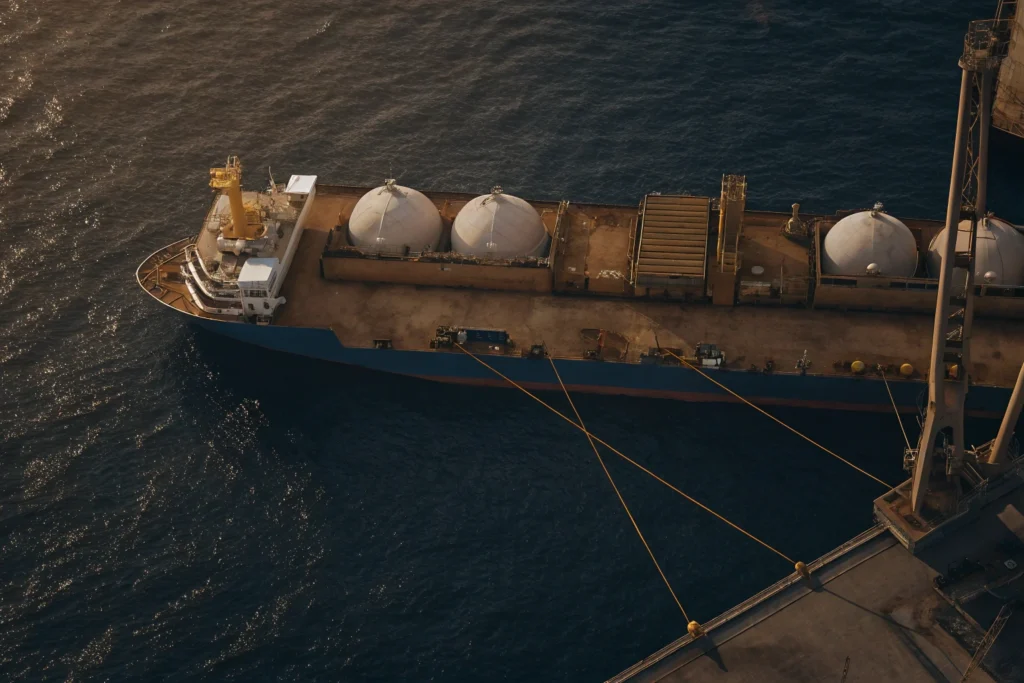
Floating Production Storage and Offloading (FPSO) units are permanently moored offshore facilities used for oil and gas production, storage, and offloading.
Unlike conventional tanker mooring, FPSO systems remain on station for many years while continuously resisting environmental loads generated by waves, wind, and ocean currents.
Synthetic mooring ropes are essential components of these systems, providing reliable station keeping with reduced weight and excellent fatigue performance.
How FPSO Mooring Works
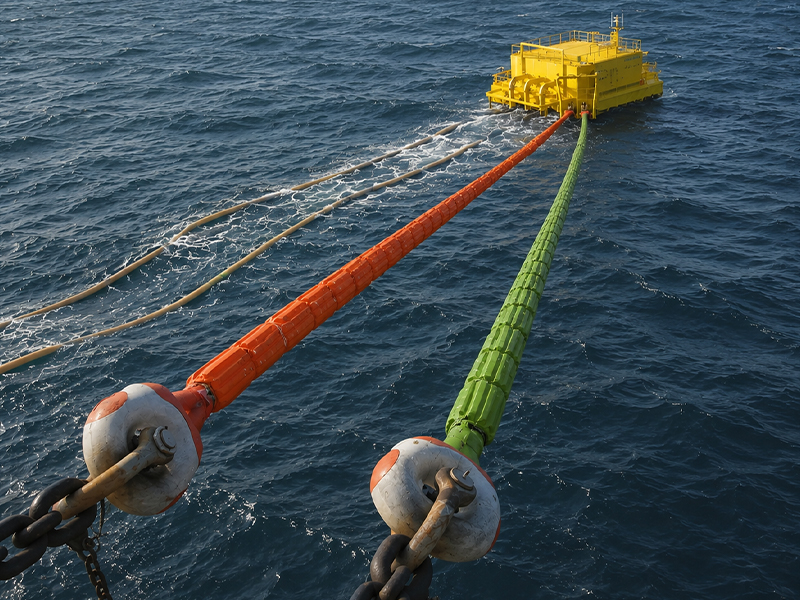
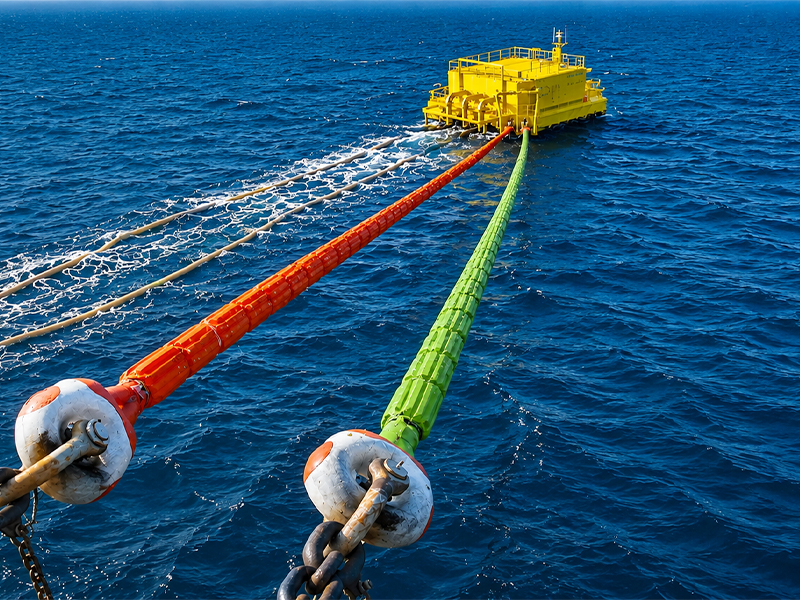
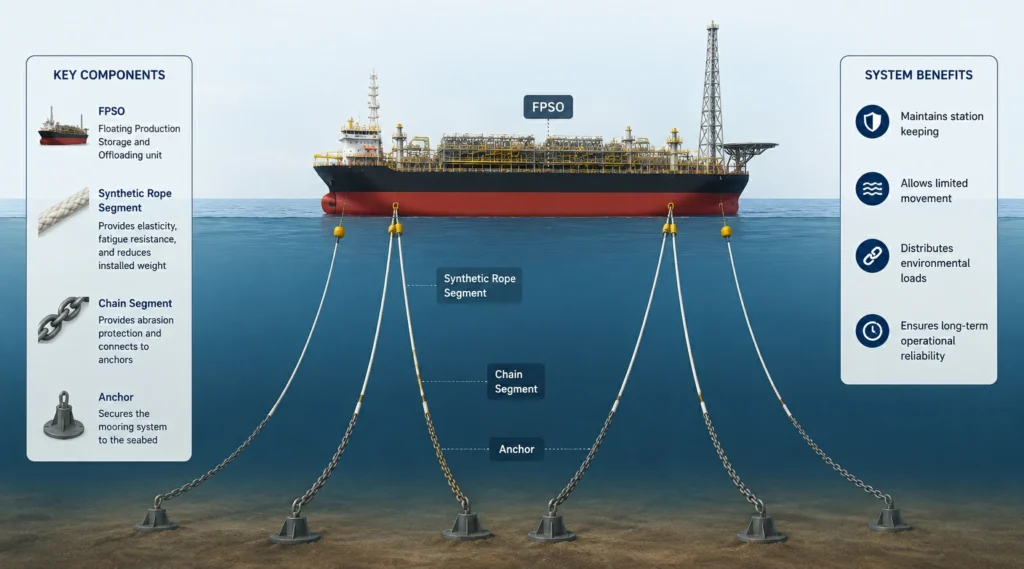
Multiple mooring lines connect the FPSO to seabed anchors through chain and synthetic rope segments. Together they maintain vessel position while allowing limited movement under environmental loading.
Engineering Advantages
Excellent Fatigue Resistance
Engineered for continuous cyclic loading throughout decades of offshore service.
Deepwater Capability
Lightweight synthetic ropes reduce suspended weight in deepwater installations.
Long-Term Station Keeping
Provides dimensional stability for accurate vessel positioning.
Custom Engineering
Tailored rope solutions for offshore projects.
Performance Requirements for FPSO Mooring Ropes
Long-Term Fatigue Resistance
Permanent FPSO systems experience millions of loading cycles throughout their operational life.
Engineering impact
Maintains structural integrity over long-term deployment.
Low Creep Performance
Permanent elongation must be minimized to maintain accurate station keeping.
Engineering impact
Improves positional stability and reduces maintenance.
High Strength-to-Weight Ratio
Synthetic ropes significantly reduce installation loads compared with steel wire ropes.
Engineering impact
Simplifies installation and lowers offshore handling costs.
Environmental Durability
Outstanding resistance to seawater, UV radiation, and marine environments.
Engineering impact
Ensures reliable long-term performance offshore.
Deepwater Performance
Low submerged weight makes synthetic ropes particularly suitable for deepwater mooring.
Engineering impact
Improves system efficiency in water depths exceeding several hundred meters.
Long Design Service Life
Designed for continuous offshore operation over extended project lifecycles.
Engineering impact
Reduces lifecycle cost and replacement frequency.
Recommended Rope Materials for FPSO Mooring
Polyester Rope(Primary)
⭐⭐⭐⭐⭐
Best for Permanent Mooring Systems
- Outstanding fatigue resistance
- Excellent dimensional stability
- Proven deepwater performance
- Long design life
HMPE Rope(Alternative)
⭐⭐⭐⭐
Best for Lightweight Mooring Solutions
- Extremely lightweight
- High strength-to-weight ratio
- Easy installation
- Suitable for hybrid systems
Material Comparison
| Feature | Polyester | HMPE |
|---|---|---|
| Fatigue Resistance | ⭐⭐⭐⭐⭐ | ⭐⭐⭐⭐ |
| Weight | ⭐⭐⭐ | ⭐⭐⭐⭐⭐ |
| Strength | ⭐⭐⭐⭐ | ⭐⭐⭐⭐⭐ |
| Creep Resistance | Excellent | Depends on fiber grade |
| Deepwater | Excellent | Excellent |
| Typical Use | Permanent Mooring | Hybrid / Lightweight Systems |
Typical FPSO Applications
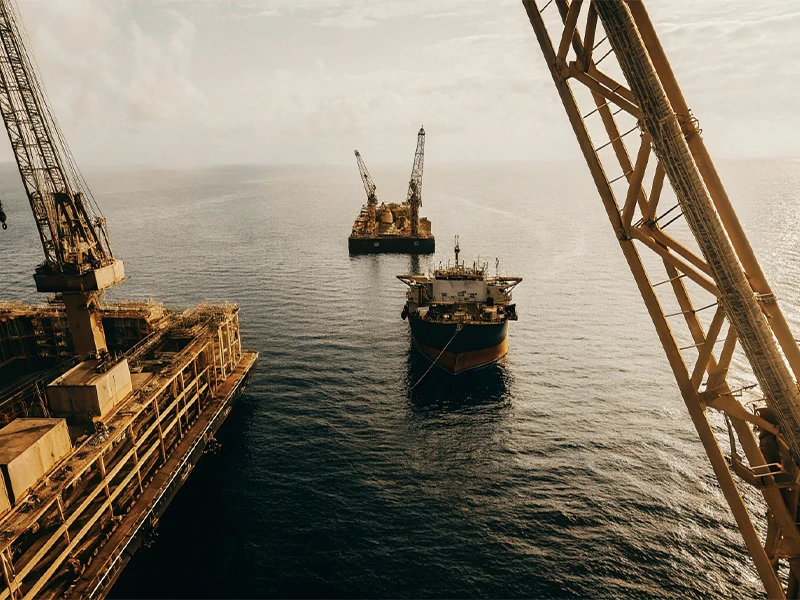
Deepwater FPSO
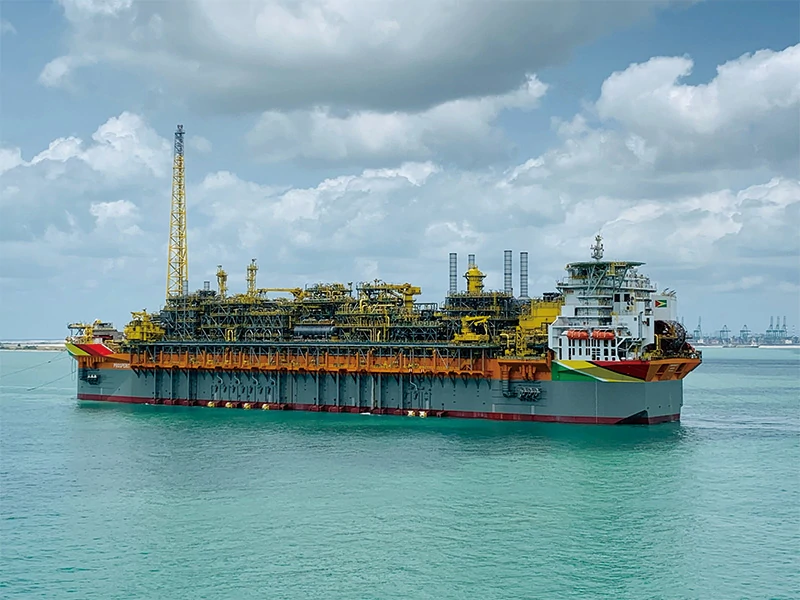
Floating Production Units
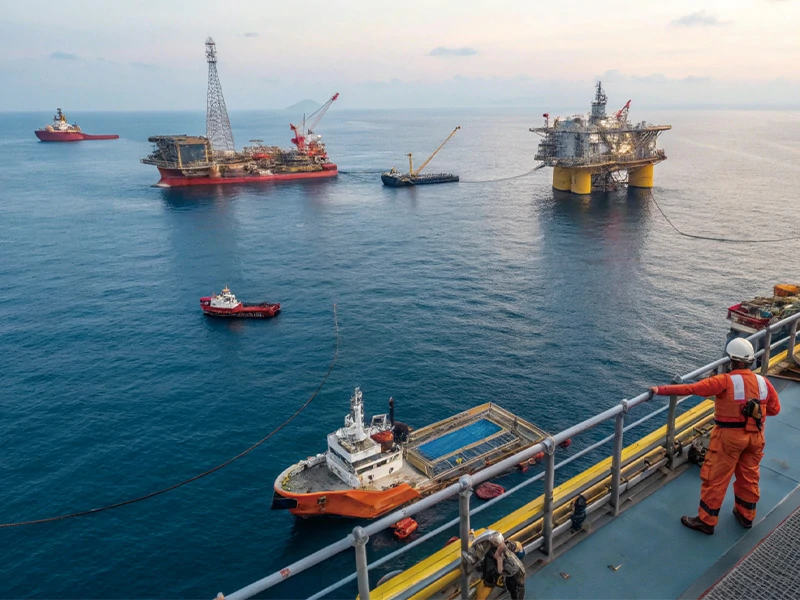
Offshore Oil Fields
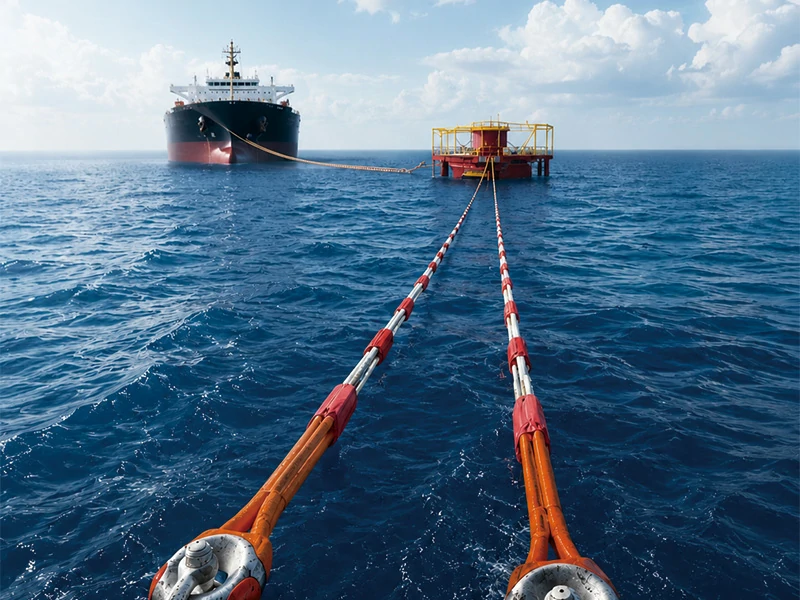
Permanent Mooring Systems
Technical Specifications
| Item | Value |
|---|---|
| Materials | Polyester / HMPE |
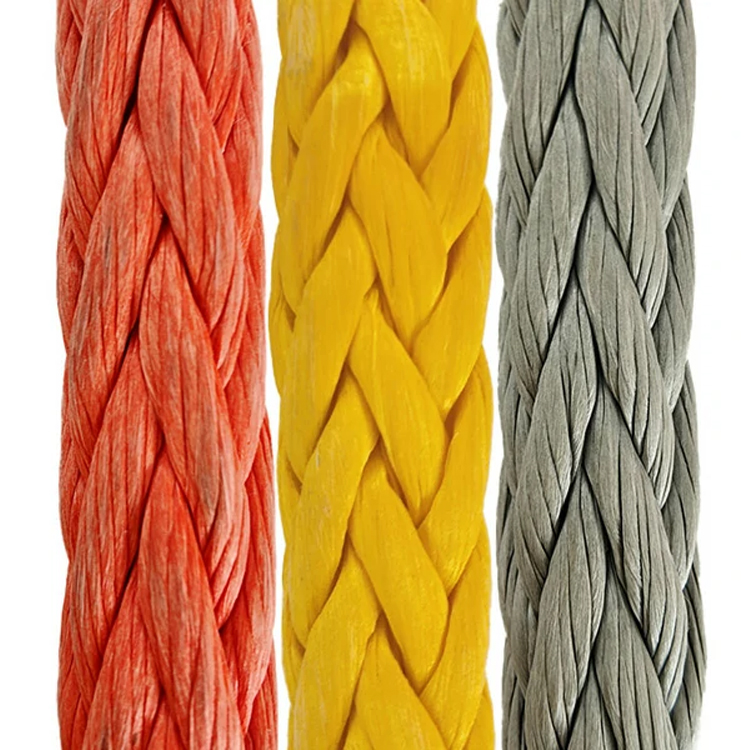
| Construction | 8 Strand / 12 Strand |
| Diameter | Custom Available |
| Breaking Strength | According to Project Design |
| Water Depth | Custom |
| Certification | DNV / ABS / BV / LR |
FAQ
1. What is the difference between FPSO mooring and Single Point Mooring (SPM)?
Although both systems are used in offshore oil and gas operations, their purposes and mooring requirements are significantly different.
An FPSO mooring system is designed to keep a floating production facility securely positioned for many years while continuously resisting environmental forces such as waves, wind, and ocean currents.
A Single Point Mooring (SPM) system is primarily used for tanker loading and unloading operations. The tanker is temporarily moored to a buoy and allowed to rotate freely (weathervane) during cargo transfer.
As a result, FPSO mooring ropes prioritize long-term fatigue resistance and dimensional stability, while SPM hawsers emphasize energy absorption and elasticity during dynamic loading.
2. Why is polyester widely used for FPSO mooring systems?
Polyester has become the preferred material for permanent FPSO mooring because of its excellent balance of strength, fatigue resistance, and long-term dimensional stability.
Compared with traditional steel wire ropes, polyester ropes offer lower submerged weight, superior corrosion resistance, and easier offshore handling.
Key advantages include:
- Outstanding fatigue resistance
- Excellent resistance to seawater and UV exposure
- Low creep for long-term station keeping
- Proven performance in deepwater offshore projects
- Reduced installation and maintenance costs
These characteristics make polyester an ideal solution for permanent offshore mooring applications.
4. Can FPSO mooring ropes be customized?
Yes.
We provide customized synthetic mooring rope solutions to meet the specific requirements of offshore projects.
Customization options include:
- Rope material (Polyester or HMPE)
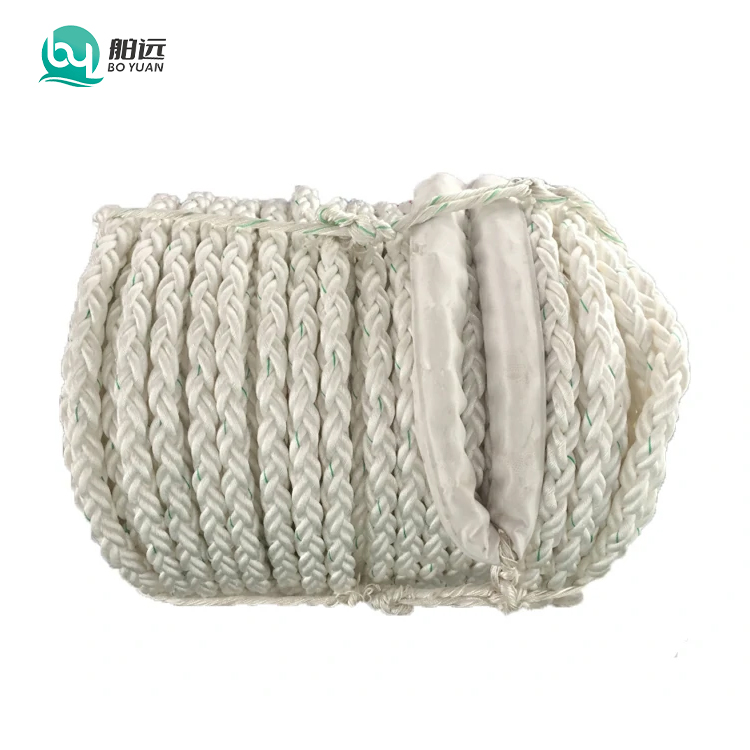
- Rope construction (8-Strand, 12-Strand, Double Braided, etc.)
- Diameter and length
- Eye splice configuration
- Protective jackets
- End terminations
- Project-specific testing requirements
Each rope assembly is engineered according to the customer’s operating conditions and mooring system design.
5. What certifications are available?
Our FPSO mooring ropes can be supplied with third-party inspection and certification upon request.
Available certification options include:
- DNV
- ABS
- BV
- LR
- CCS
- RINA
- NK
Material certificates, proof load test reports, and inspection documentation can also be provided according to project specifications.
6. How long do FPSO mooring ropes typically last?
The service life of FPSO mooring ropes depends on several factors, including water depth, environmental conditions, loading history, inspection intervals, and operational practices.
Polyester mooring ropes used in permanent offshore systems are typically designed for long-term service under continuous cyclic loading. Regular inspection and proper maintenance help maximize operational life while ensuring safety and reliability.
The actual replacement schedule should always follow project specifications and operator maintenance procedures.
7. What factors should be considered when selecting FPSO mooring ropes?
Selecting the appropriate mooring rope requires a comprehensive evaluation of the project’s engineering requirements.
Key considerations include:
- Water depth
- Environmental conditions
- Mooring configuration
- Vessel displacement
- Design service life
- Fatigue performance
- Installation method
- Applicable industry standards
Choosing the right rope material and construction helps optimize station keeping performance while reducing life-cycle costs.
8. Why choose synthetic ropes instead of steel wire ropes for FPSO mooring?
Synthetic mooring ropes have become the preferred solution for many offshore mooring systems because they provide significant operational advantages over traditional steel wire ropes.
Compared with steel wire ropes, synthetic ropes offer:
- Lower weight for easier installation
- Excellent corrosion resistance
- Reduced maintenance requirements
- Superior fatigue performance
- Improved offshore handling safety
- Lower transportation and installation costs
These benefits contribute to improved operational efficiency and long-term reliability in offshore environments.