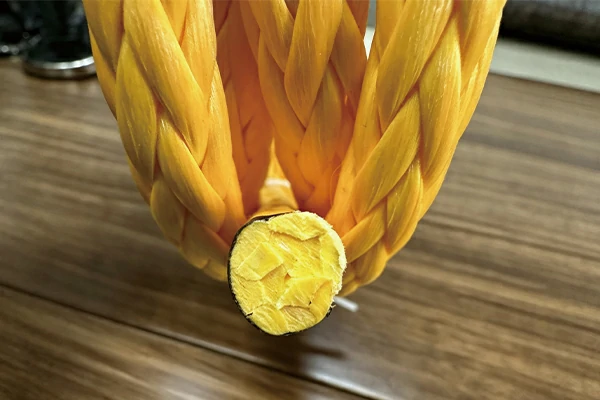
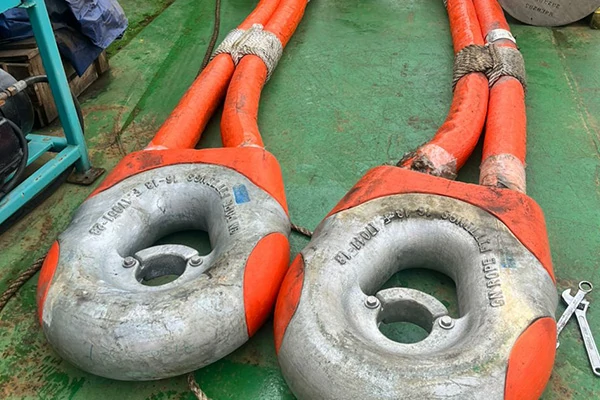
HMPE rope is known for its remarkable stiffness, which refers to its ability to resist deformation under tension or bending. Compared to other synthetic materials like nylon or polypropylene, HMPE ropes are more rigid. They show minimal elongation under heavy loads. They also retain their shape more reliably. This stiffness makes them highly advantageous in applications requiring strength, precision, and durability.
One of the defining features of HMPE rope stiffness is its low elongation. When subjected to tension, HMPE ropes stretch very little, ensuring reliable performance when lifting or securing heavy objects. This characteristic makes them ideal for tasks requiring minimal elongation, such as industrial rigging, marine mooring, or towing operations. The rope’s initial stiffness is quite high, meaning that new HMPE ropes tend to be more rigid and may require a break-in period to become more flexible. However, even with increased use, they maintain their structural integrity and strength.
Another significant advantage of HMPE rope stiffness is its consistent performance across a wide range of temperatures. Unlike some synthetic materials that become brittle in cold conditions or soften under heat, HMPE ropes retain their rigidity and strength, making them reliable in extreme environments. This property is particularly useful in offshore and maritime applications, where temperature fluctuations are common.
The combination of high stiffness and durability provides several benefits. HMPE ropes offer excellent control and stability, making them well-suited for precision tasks. Despite their rigidity, these ropes are lightweight and easier to handle than traditional steel cables, enhancing operational efficiency. Their resistance to abrasion and UV radiation further ensures that they maintain their stiffness and performance over time, even in harsh conditions.
In summary, HMPE rope stiffness ensures reliable, long-lasting performance in demanding applications. Its low elongation, temperature resilience, and consistent strength make it an indispensable tool in industrial, marine, and offshore environments, where precision and durability are paramount.