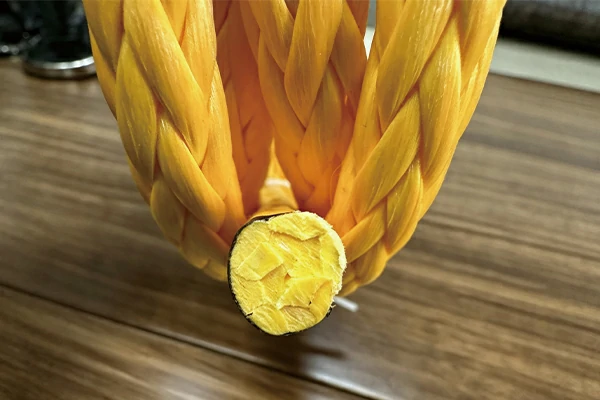
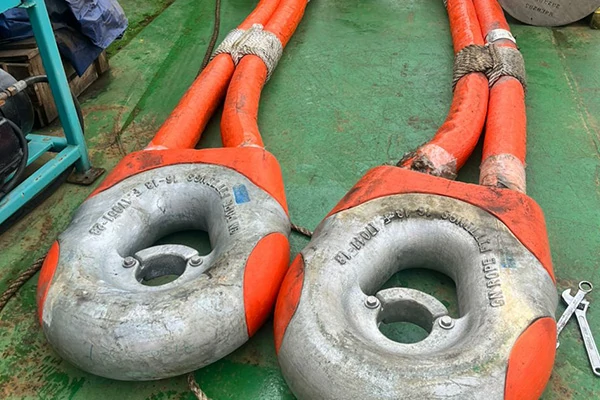
Mooring line failure poses severe safety and operational risks. Understanding the primary causes of mooring rope degradation is crucial for prevention. Here are the top 5 hidden destroyers:
1.Critical Friction Points
Constant abrasion at fairleads, bollards, and sharp quay edges is a leading cause of mooring line wear. This localized cyclic loading damages outer yarns, progressively weakening the rope.
2.UV Radiation Degradation
Prolonged exposure to UV degradation breaks down polymer chains in synthetic mooring ropes (polyester, nylon, HMPE), reducing strength and flexibility. Ropes become brittle and prone to snapping.
3.Chemical Corrosion & Contamination
Exposure to oils, chemicals, acidic/alkaline environments, and even saltwater can cause chemical degradation. This leads to internal fiber damage, reduced lubricity, and accelerated aging.
4.Overload Scenarios & Shock Loading
Exceeding the safe working load (SWL) or minimum breaking strain (MBS) during mooring operations, or experiencing severe shock loading(e.g., from vessel surge or sudden weather changes), causes immediate damage or cumulative fatigue.
5.Improper Storage & Handling
Storing ropes coiled tightly on wet/dirty surfaces, dragging them over abrasive ground, or improper coiling techniques introduces kinks, internal abrasion (internal wear), and moisture retention, fostering mildew and hidden damage.
Actionable Prevention Checklist
> Inspect Religiously: Visually and tactilely check lines before and after every use for cuts, abrasion, stiffness, discoloration (UV damage), and chemical contamination.
> Mitigate Chafe: Deploy high-quality chafing gear (leather, synthetic pads) at all critical contact points; inspect and replace gear frequently.
> Control Exposure: Store ropes clean, dry, loose, and shaded when not in use. Rotate lines to distribute UV exposure.
> Enforce Load Limits: Never exceed SWL/MBS. Use tension monitoring systems if possible.
> Train Crews: Ensure personnel understand proper handling, coiling/uncoiling techniques, and the critical signs of mooring line damage.
Proactive identification and mitigation of these mooring line failure mechanisms significantly enhance mooring safety, extend rope service life, and optimize operational costs.