The lifespan of marine mooring ropes is a critical concern for ship operators, port authorities, and offshore facilities. While there is no fixed service life for all mooring ropes, understanding the factors that influence durability helps users plan maintenance, reduce risk, and control long-term operating costs.
1. Material Type and Rope Performance
The primary determinant of mooring rope lifespan is the material used. Polypropylene (PP), polyester, and nylon mooring ropes each perform differently under marine conditions.
PP ropes are lightweight and economical but typically have a shorter service life due to lower abrasion and UV resistance. Polyester mooring ropes are widely used for permanent mooring systems because of their excellent dimensional stability, strong resistance to UV exposure, and low creep characteristics. Nylon ropes offer superior elasticity and shock absorption, which can extend service life in high-dynamic load environments when properly managed.
2. Operating Conditions and Load Cycles
Actual working conditions often have a greater impact on rope lifespan than material selection alone. Constant exposure to saltwater, sunlight, cyclic loading, and mechanical abrasion accelerates fiber degradation. Mooring ropes used in high-traffic ports or offshore locations experience frequent load variations, which gradually reduce residual strength over time.
3. Rope Construction and Diameter
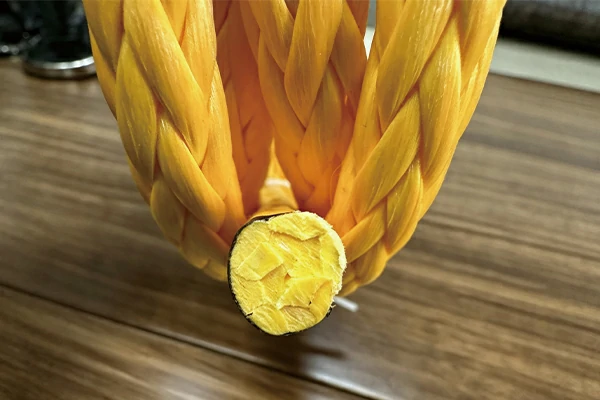
Rope construction directly affects wear resistance and fatigue life. Multi-strand and braided mooring ropes generally provide better load distribution and longer service life than basic three-strand constructions. Selecting the correct diameter for the intended working load is equally important, as undersized ropes are more prone to early fatigue and structural damage.
4. Inspection, Maintenance, and Storage
Regular inspection is essential to maximizing mooring rope lifespan. Signs such as broken yarns, surface glazing, stiffness, or diameter reduction indicate material fatigue. Proper storage—away from direct sunlight, chemicals, and excessive heat—also helps preserve rope integrity when not in use.
5. When Should Mooring Ropes Be Replaced?
Mooring ropes should be replaced when visible damage, significant strength loss, or safety standards are no longer met. Following manufacturer guidelines and industry best practices ensures continued operational safety.
Need help extending the lifespan of your marine mooring ropes? Get in touch with us for technical specifications and expert advice.