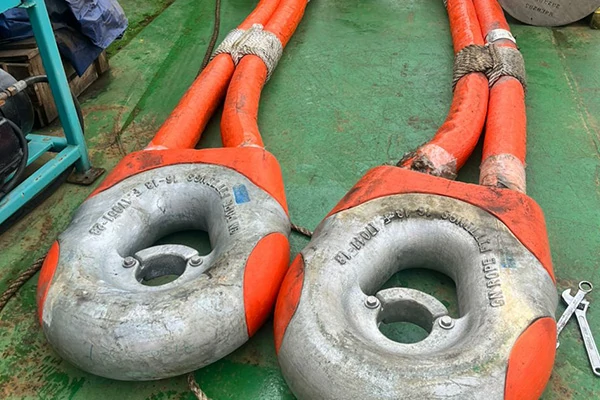
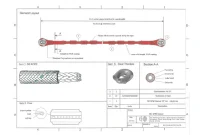
Understanding marine rope types is critical for safety and performance. The rope structure – how fibers are twisted or braided – dictates its handling, strength, durability, and best uses onboard.
3-Strand Twisted (Traditional)
Construction: Three strands twisted together.
Pros: Affordable, easy to splice, good grip.
Cons: Prone to hockles (kinks), stiffer.
Typical Marine Uses: Mooring lines , general dock lines, anchor rodes (often with a chain leader).
8-Strand Plaited (Braided)
Construction: Eight strands braided in pairs around a core (often hollow).
Pros: Flexible, kink-resistant, easy handling, good strength-to-diameter.
Cons: Splicing is more complex than 3-strand.
Typical Marine Uses: Popular all-rounder: sheets, halyards, dock lines, tow lines.
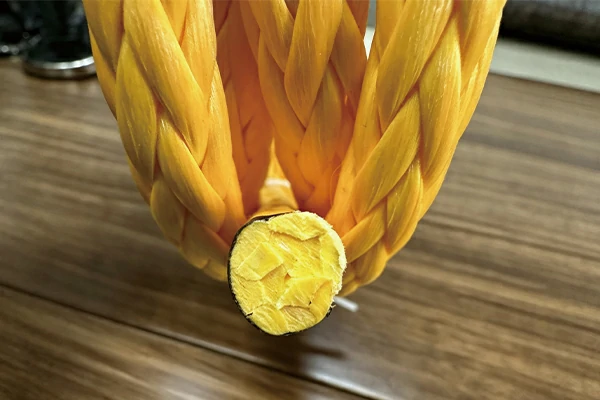
12-Strand Single Braid (Hollow Braid)
Construction: Twelve or more strands braided into a smooth, often hollow coreless structure.
Pros: Extremely flexible, very smooth handling, lightweight, low stretch (when Dyneema/Spectra).
Cons: Can be harder to grip, splicing requires specific techniques.
Typical Marine Uses: High-performance running rigging (halyards, sheets), control lines, where low weight/stretch is key.
Single Braid (With Core – Jacketed)
Construction: A braided outer cover (jacket) protecting a load-bearing inner core (kern).
Pros: Excellent abrasion resistance (cover protects core), very strong for diameter, low stretch (dependent on core).
Cons: Most complex splicing, potentially higher cost.
Typical Marine Uses: Crucial high-load applications: halyards, sheets, mainsheets, winch lines.
Double Braid
Construction: A braided core inside a braided cover (both share the load).
Pros: Combines strength, durability, flexibility, and good handling. Good abrasion resistance.
Cons: Splicing is complex, heavier than single braid hollow cores.
Typical Marine Uses: Versatile heavy-duty use: dock lines, anchor lines, tow lines, primary sheets/halyards.
Choose wisely:Match the rope structure to the task. Consider load, abrasion exposure, required flexibility, stretch tolerance, and ease of handling/splicing for optimal marine safety and boat rope performance.
The ropes mentioned above can be obtained from our official website.